Spring is the ideal time for suspension maintenance, and even though Colorado had an unusually mild winter this year, your vehicle’s suspension system still took a beating. At Autovisions in Englewood, CO, we see it every season: potholes, rough road surfaces, and everyday wear all add up over time, putting stress on your shocks, struts, springs, and steering components with every mile you drive.
When warmer weather arrives, addressing this accumulated wear becomes a top priority. A thorough suspension inspection and service can restore your ride comfort, improve handling, and keep you safe on Englewood roads. This guide explains why spring is the perfect season to focus on your suspension, what warning signs to watch for, and how professional service helps you start the season strong.
Why Colorado Winters Are Hard on Your Suspension
Colorado winters create the perfect conditions for suspension wear. Understanding how this damage happens helps you recognize when service is needed.
Potholes and Road Hazards
Freezing and thawing cycles cause asphalt to crack and break apart, creating potholes that seem to appear overnight. Hitting these road hazards at speed sends shockwaves through your suspension components. Repeated impacts can bend control arms, damage ball joints, and wear out shocks and struts prematurely. The Denver metro area sees significant pothole development each spring, making inspection essential for drivers in Englewood, Littleton, and surrounding communities.
Salt and Moisture Exposure
Road salt prevents ice buildup, but it also accelerates corrosion on metal suspension parts. Moisture gets trapped in joints and bushings, leading to rust and degradation. By spring, components that looked fine in October may show significant wear underneath the vehicle.
Temperature Extremes
Rubber bushings and seals contract in cold weather and expand in warmth. This constant cycling causes these materials to crack and lose flexibility over time. Worn bushings allow excessive movement in suspension joints, leading to clunking noises and imprecise handling.
What a Professional Suspension Inspection Covers
A comprehensive suspension inspection goes beyond a quick visual check. Our skilled mechanics examine every component that affects your vehicle’s ride quality and safety.
Shocks and Struts
These components control how your vehicle responds to bumps and dips in the road. Mechanics check for leaking fluid, worn mounts, and diminished dampening ability. Worn shocks and struts cause excessive bouncing, nose-diving during braking, and poor handling in curves.
Springs and Coils
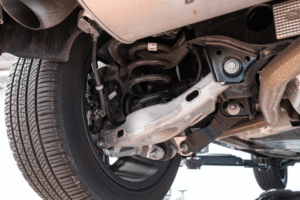
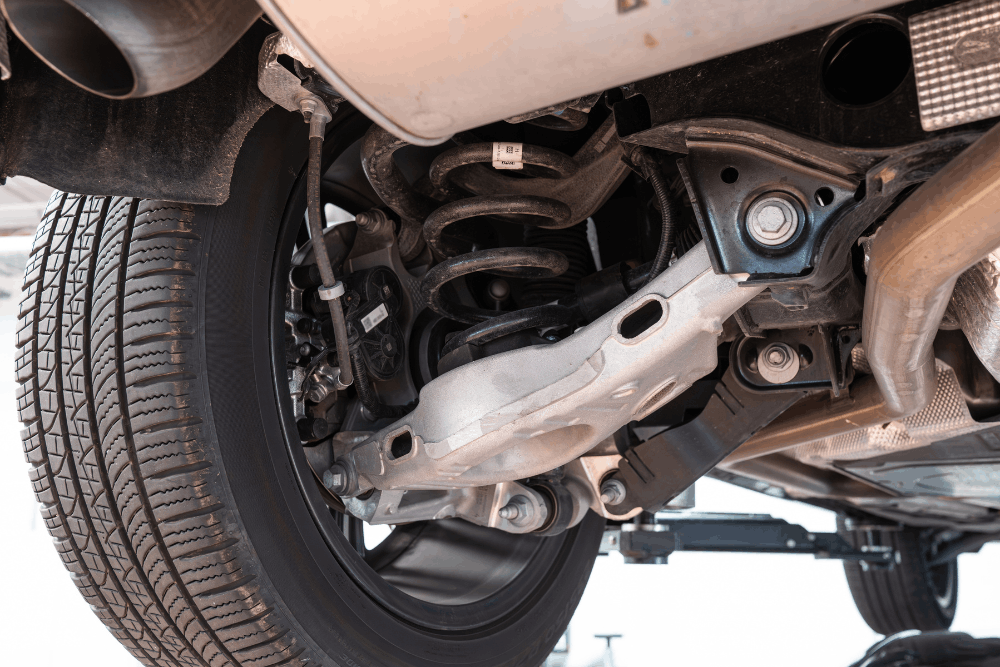
Springs support your vehicle’s weight and work alongside shocks to absorb road imperfections. Cracked, broken, or sagging springs cause uneven ride height and put extra stress on other suspension components. Mechanics measure ride height and visually inspect springs for damage.
Control Arms and Ball Joints
These parts connect your wheels to the vehicle frame and allow for steering movement. Worn ball joints create play in the steering, causing wandering and uneven tire wear. Control arm bushings deteriorate over time, leading to clunking sounds over bumps.
Tie Rods and Steering Linkage
The steering system works closely with your suspension. Worn tie rod ends cause loose steering feel and can affect wheel alignment. Our mechanics check for excessive play and ensure all connections are tight and secure.
Wheel Alignment Check
Suspension wear often throws wheel alignment out of specification. A proper inspection includes checking alignment angles to identify any issues caused by worn components or pothole impacts.
Suspension Warning Signs Englewood Drivers Shouldn't Ignore
Your vehicle communicates suspension problems through specific symptoms. Recognizing these signs early prevents more expensive repairs down the road.
- Rough or bouncy ride: If every bump feels harsh or your vehicle bounces excessively, your shocks or struts may be worn.
- Vehicle pulling to one side: This can indicate alignment issues caused by suspension wear or a damaged component.
- Uneven tire wear: Suspension problems cause tires to wear unevenly, often on the inside or outside edges.
- Nose-diving or squatting: If the front end dips during braking or the rear squats during acceleration, your shocks need attention.
- Clunking or knocking noises: Loose or worn suspension components create noise when traveling over bumps or rough roads.
- Steering wheel vibration: Worn suspension parts or alignment issues often cause vibrations felt through the steering wheel.
- Difficulty steering: Heavy or unresponsive steering can indicate tie rod or steering linkage problems.
If you notice any of these symptoms, don’t wait. Call Autovisions at 303-761-5100 or visit us at 3701 S Santa Fe Dr Unit 5, Englewood, CO 80110 to schedule your suspension inspection today. Driving on worn suspension components compromises your safety and accelerates wear on other parts.
The Connection Between Spring Car Maintenance and Suspension Health
Spring car maintenance encompasses many services, but suspension inspection deserves special attention. The timing aligns perfectly with when winter damage becomes apparent and before summer driving demands peak performance from your vehicle.
Many drivers in Littleton, Englewood, and Denver plan road trips and outdoor adventures during Colorado’s beautiful summer months. Starting the season with a thorough suspension check ensures your vehicle handles mountain roads, highway miles, and daily commutes with confidence.
Combining suspension service with other spring maintenance tasks like brake inspection, fluid checks, and A/C service creates a comprehensive approach to vehicle care. This proactive strategy prevents breakdowns and keeps your transportation reliable throughout the busy months ahead.
Why Choose Autovisions for Your Spring Car Maintenance
We get it. Finding a mechanic you can trust is tough. That is why we focus on getting to know you and your vehicle, not just pushing services you do not need. When you walk in, you are not a number. We will talk through what is going on with your car, answer your questions, and let you decide what makes sense for your budget and schedule.
- ASE-certified Blue Seal Shop
- Hunter Hawkeye Elite alignment machine for precise suspension work
- 3-year/36,000-mile warranty on most repairs
- RepairPal certified
- Wi-Fi, coffee bar, and key drop box for convenience
Preparing Your Vehicle for Colorado's Spring and Summer
Beyond suspension service, spring offers an excellent opportunity to address other maintenance needs. A complete approach to spring car maintenance sets you up for worry-free driving.
- Brake inspection: Winter driving demands a lot from your brakes. Have pads, rotors, and brake fluid checked before summer road trips.
- Fluid services: Transmission fluid, coolant, and power steering fluid should be inspected and serviced as needed.
- A/C system check: Colorado’s warm months arrive quickly. Ensuring your A/C blows cold before temperatures climb prevents uncomfortable surprises.
- Tire evaluation: Check tread depth and condition. If you ran winter tires, swap back to all-seasons and have alignment checked.
- Battery testing: Temperature extremes stress batteries. A quick test identifies weak batteries before they leave you stranded.
Addressing these items together with suspension service creates a comprehensive spring maintenance plan that protects your investment and your safety.
FAQs About Spring Car Maintenance and Suspension Service
What car maintenance should be done in the spring?
Spring car maintenance should include suspension inspection, brake check, fluid services, A/C system evaluation, tire assessment, and battery testing. These services address winter wear and prepare your vehicle for warmer weather driving demands.
How do I know if my car suspension is bad?
Common signs include a rough or bouncy ride, vehicle pulling to one side, uneven tire wear, clunking noises over bumps, and steering wheel vibration. Any of these symptoms warrant a professional inspection to identify worn components.
How often should suspension be checked?
Suspension components should be inspected at least once per year or every 12,000 to 15,000 miles. After harsh winters with significant pothole exposure, an additional spring inspection is recommended to catch damage early.
Can bad suspension affect gas mileage?
Yes, worn suspension components and misalignment create additional rolling resistance that forces your engine to work harder. Proper suspension function and alignment improve fuel efficiency and reduce unnecessary fuel costs.
Is it safe to drive with a bad suspension?
Driving with worn suspension compromises braking distance, steering response, and overall vehicle control. While the car may still move, handling becomes unpredictable, especially in emergency situations or wet conditions.
Schedule Your Spring Car Maintenance in Englewood, CO Today
Ready to restore your ride comfort and start the season with confidence? Schedule your spring car maintenance and suspension service today with the trusted team at Autovisions. Visit us at 3701 S Santa Fe Dr Unit 5, Englewood, CO 80110, or call 303-761-5100 to book your appointment. We look forward to helping you stay safe on the road.